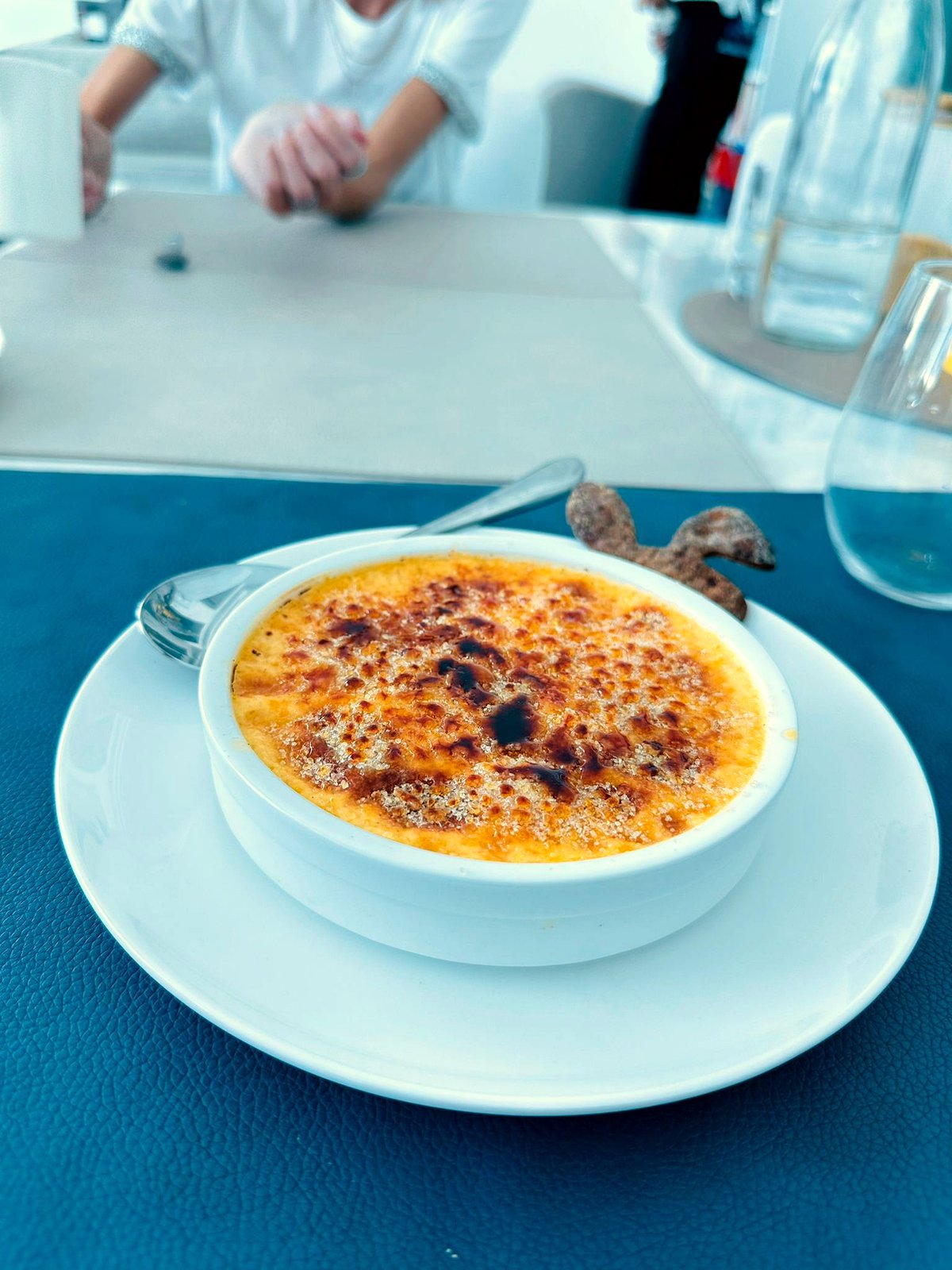
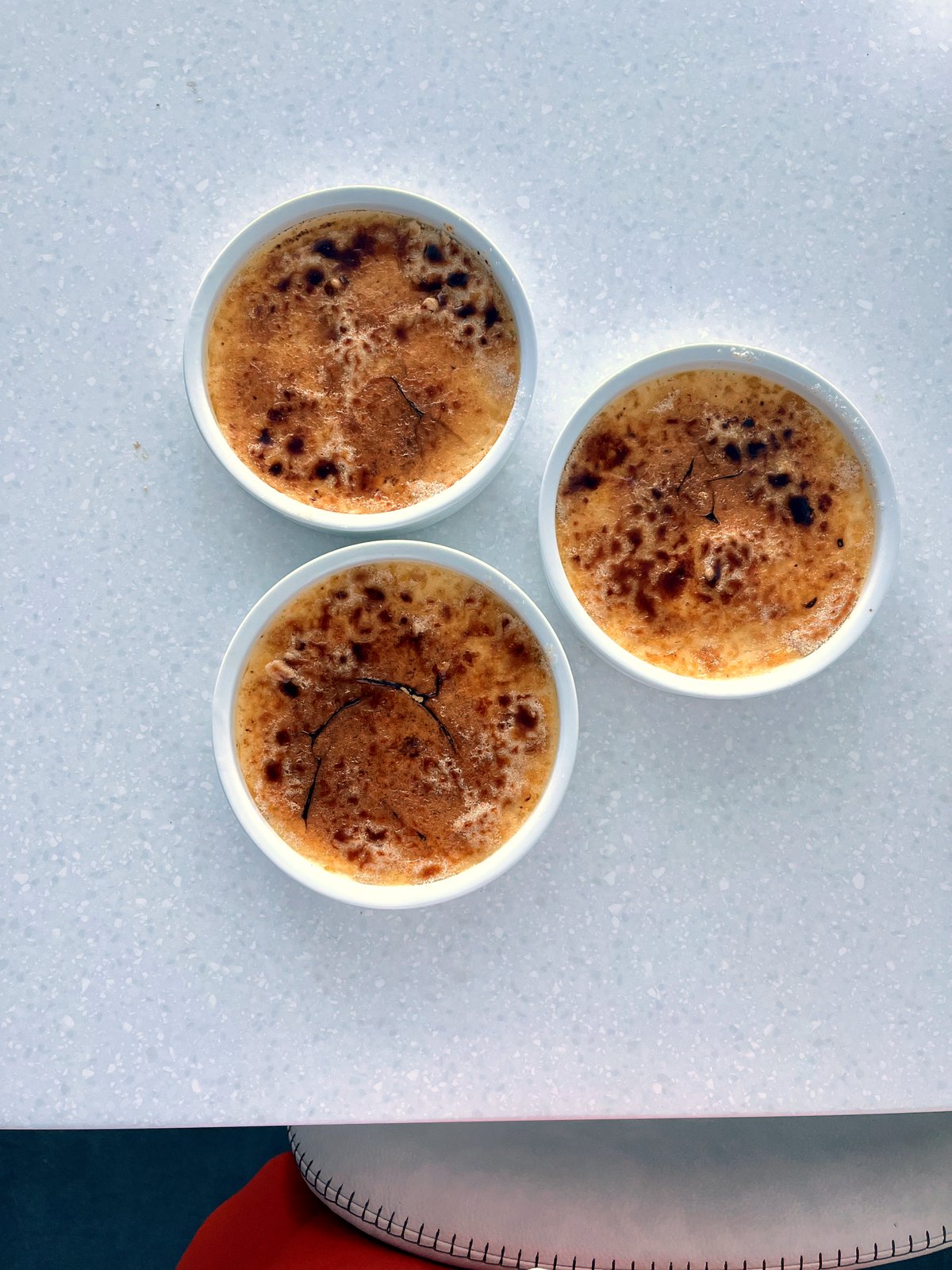
Crème Brûlée
A vanilla-pod crème brûlée with a no-sugar custard base — goat milk and A2 cream for a lighter, cleaner set, finished with a crisp brûléed top.
> Naturally gluten-free, and easy to make low-FODMAP and lower-lactose. The custard base carries no sugar of its own — the vanilla pod does the sweetening through aroma — so you can keep it plain, sweeten lightly with monkfruit or honey, or let a brûléed top and a biscuit do the work. The dairy and egg ratios are flexible; see the notes.
Makes 4 small ramekins (or 3 slightly larger) · bake 30–40 min · chill 4 hr minimum
Ingredients
Custard base
- 250ml A2 double cream
- 250ml full-fat goat milk
- 1 vanilla pod
- 5 large egg yolks
- Pinch of salt
Optional sweetener — choose one, or leave plain
- 1–2 tbsp monkfruit 1:1 (best for a classic sweetness without sugar)
- 1–2 tbsp honey (softer, warmer flavour, but slightly changes the texture)
- No sweetener (works if serving with a sweet biscuit, fruit compote, or relying on the brûléed top)
For the brûléed top
- 1–2 tsp caster sugar per ramekin (gives the best crisp, glassy top)
- Or monkfruit 1:1 (won't caramelise as cleanly)
Honey is not ideal for the top — it burns before forming a proper crust.
Method
1. Heat the milk, cream and vanilla
1. Pour the goat milk and A2 cream into a saucepan.
2. Split the vanilla pod lengthways and scrape out the seeds. Add the seeds and pod to the pan.
3. Warm gently until steaming — do not boil.
4. Turn off the heat and leave to infuse for 10–15 minutes.
2. Mix the yolks
1. Put the egg yolks, salt and optional sweetener into a bowl.
2. Whisk gently until just combined — don't over-whisk, you want a smooth custard, not bubbles.
3. Temper the eggs
1. Remove the vanilla pod from the warm cream mixture.
2. Slowly pour the warm liquid into the yolks, whisking constantly.
3. Pour through a fine sieve into a jug.
4. Bake gently
1. Heat the oven to 140°C fan / 160°C conventional.
2. Place the ramekins in a deep roasting tin.
3. Divide the custard between the ramekins.
4. Pour hot water into the tin until it comes halfway up the sides of the ramekins.
5. Bake for 30–40 minutes, depending on ramekin size.
The custards are ready when the edges are set, the centre still has a soft wobble, and they're not liquid underneath the surface. Don't bake until fully firm — they keep setting as they cool.
5. Chill
1. Remove the ramekins from the water bath.
2. Cool to room temperature.
3. Chill for at least 4 hours, ideally overnight.
6. Brûlée the top
1. Sprinkle a thin, even layer of sugar over each chilled custard.
2. Use a blow torch to melt and caramelise the sugar until golden and crisp.
3. Leave for 1–2 minutes before serving so the top hardens.
Grill option: place the ramekins under a very hot grill for 1–3 minutes, watching constantly. Less controlled than a torch, and it can warm the custard underneath.
Notes — texture and ratios
Milk-to-cream ratio
- Equal parts (250ml goat milk + 250ml A2 cream) — lighter than classic crème brûlée, still creamy but not too rich. Good with biscuits or compote. The best default.
- Richer (150ml goat milk + 350ml A2 cream) — classic restaurant texture, silkier and denser. Better served plain.
- Lighter (350ml goat milk + 150ml A2 cream) — softer and more delicate, slightly less luxurious. Needs careful baking as it sets more loosely.
Egg yolks vs whole eggs
- 5 yolks only — best for classic crème brûlée: smoothest texture, richer mouthfeel, delicate set, less eggy if baked gently. The best default.
- 3 whole eggs — firmer, more custard-tart-like, less silky, more likely to taste eggy. Useful for a stronger set or less waste.
- 3 yolks + 1 whole egg — a good compromise: slightly firmer than yolks-only, still fairly smooth.
Ingredient notes
- Goat milk — keeps the custard lighter and cleaner-tasting than cream alone. Full-fat is best; low-fat makes the custard thin.
- A2 cream — richness and a smooth set. Equal parts with goat milk gives creaminess without heaviness.
- Vanilla pod — important here because there's little or no sugar; the vanilla gives sweetness through aroma rather than actual sweetness.
- Salt — a tiny pinch sharpens the vanilla and stops the custard tasting flat.
- Sweetener — sugar isn't structurally essential in the custard, so it can be left out. Plain, it tastes more like vanilla cream than dessert — lean on a sweet topping, biscuit or compote.
Serving ideas
Gluten-free shortbread
Ingredients
- 100g gluten-free plain flour
- 50g butter, softened
- 20–30g caster sugar or monkfruit 1:1
- Pinch of salt
- Optional: ½ tsp vanilla extract
Method
1. Heat the oven to 160°C fan / 180°C conventional.
2. Rub or beat together the butter, flour, sweetener and salt until a dough forms.
3. Press into a small disc or rectangle. Chill for 15 minutes if soft.
4. Bake for 12–16 minutes, until lightly golden at the edges.
5. Cool fully before serving.
Use monkfruit 1:1 for a no-sugar biscuit; caster sugar gives the best classic shortbread texture. Add a little extra flour if the dough feels sticky.
Almond tuiles
Ingredients
- 1 egg white
- 25g melted butter
- 25g ground almonds
- 20–30g caster sugar or monkfruit 1:1
- 10g gluten-free plain flour
- Pinch of salt
- Optional: flaked almonds
Method
1. Heat the oven to 160°C fan / 180°C conventional.
2. Mix the egg white, melted butter, ground almonds, sweetener, flour and salt into a loose batter.
3. Spoon small amounts onto a lined baking tray and spread very thinly with the back of a spoon.
4. Scatter over flaked almonds if using.
5. Bake for 7–10 minutes, until golden at the edges.
6. While warm, drape over a rolling pin for a curved shape. Cool fully so they crisp up.
Better with sugar, which helps crispness — monkfruit works but is more fragile. Keep them thin; thick tuiles stay chewy.
Berry compote
Good with raspberries, blackberries, blueberries or strawberries.
1. Add 200g berries to a pan with 1–2 tsp lemon juice and, optionally, 1 tsp honey or monkfruit.
2. Cook gently for 5–8 minutes, until just saucy.
3. Cool before serving.
Gluten-free notes
Crème brûlée is naturally gluten-free — the custard contains no flour. The only things to watch:
- If serving with the shortbread or almond tuiles, use a certified gluten-free plain flour.
- Check any shop-bought sweetener is not processed alongside gluten.