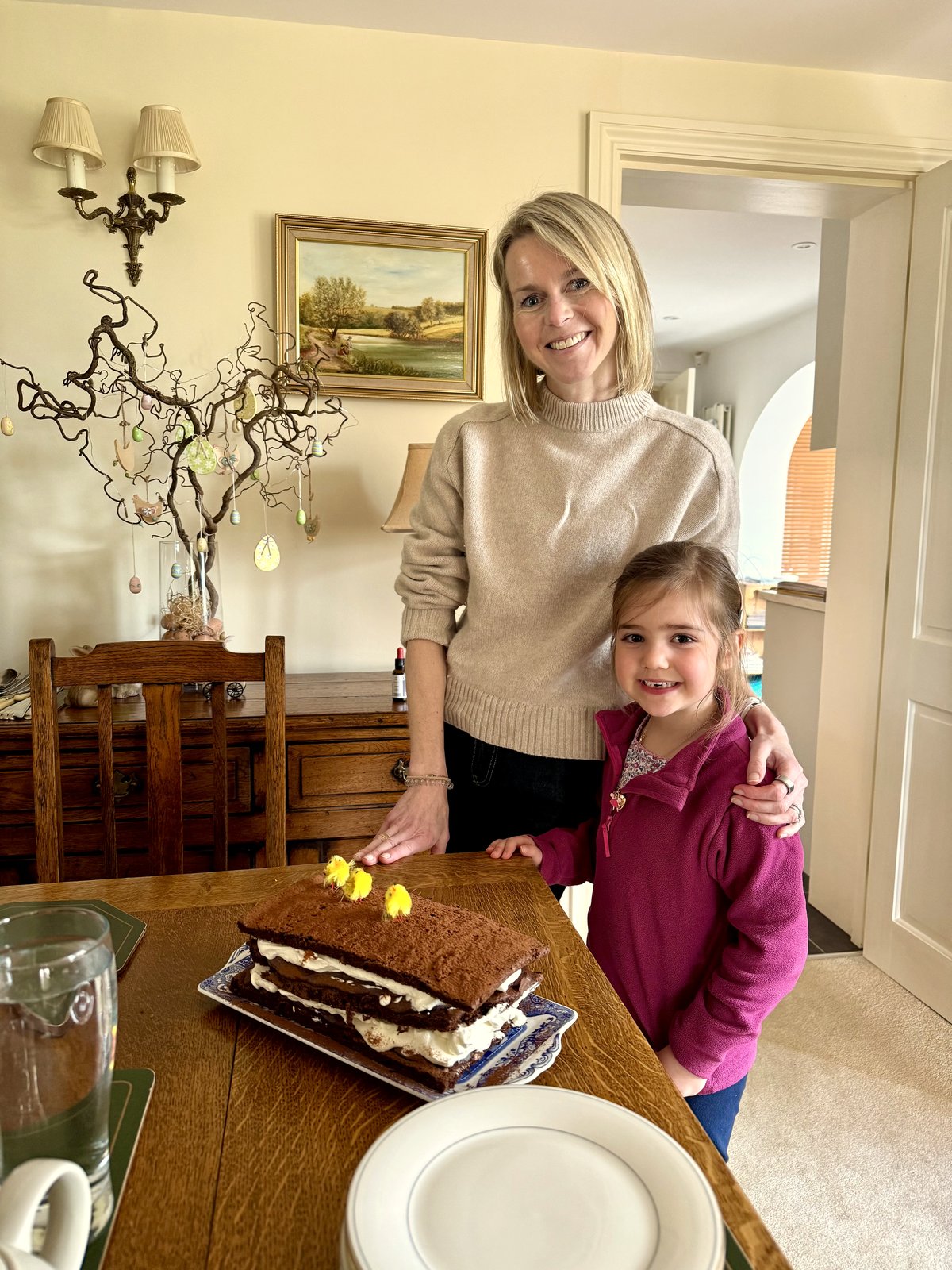
The lightest double chocolate layer cake
Ingredients
For the cake
- 6 large eggs, separated
- 85g caster sugar
- 50g cocoa powder
For the chocolate mousse filling
- 225g dark chocolate
- 100ml warm water
- 2 large eggs, separated
To finish
- 425ml double cream
- 100g dark chocolate, grated or shaved
Method
1. Prepare the tin
- Preheat the oven to 180°C / 160°C fan.
- Line a Swiss roll tin or similar shallow rectangular tin with baking paper.
2. Make the mousse filling
- Melt the 225g dark chocolate with the warm water in a heatproof bowl set over barely simmering water. Stir until smooth, then remove from the heat.
- Beat in the 2 egg yolks, one at a time, until fully incorporated.
- In a clean bowl, whisk the 2 egg whites until stiff. Fold them gently into the chocolate mixture.
- Chill until needed.
3. Make the cake
- Whisk the 6 egg yolks with the 85g caster sugar until thick, pale and fluffy.
- Sift in the cocoa powder and whisk until smooth.
- In a separate clean bowl, whisk the 6 egg whites until stiff peaks form.
- Fold the whites gently into the chocolate mixture in 3 additions, keeping as much air in as possible.
4. Bake
- Pour into the lined tin and spread evenly.
- Bake for 20–25 minutes, until the cake is risen and just set but still soft. It should feel springy rather than firm.
- Leave to cool in the tin.
5. Assemble
- Turn the cooled cake out carefully and cut into 2 equal pieces.
- Spread one half with the chilled chocolate mousse.
- Whip the double cream to soft peaks and spread some over the mousse.
- Top with the second half of cake.
- Spread the remaining whipped cream over the top and finish with grated or shaved dark chocolate.
Notes
- With the sugar reduced to 85g, expect the sponge to be slightly less sweet, a little softer, and more intensely chocolatey.
- Whisking well and folding gently matter even more with the reduced sugar.
- Best kept chilled once assembled.
How this works (the science)
This is the most extreme low-everything chocolate cake you can make: no flour, no butter, no chemical leavener — just 6 eggs, 85g sugar and 50g cocoa. Naturally gluten-free, very low fat, low sugar. It works because cocoa powder is doing the structural job that flour usually does.
- No flour at all — cocoa powder (50g) is the structure. Cocoa is essentially defatted ground cocoa solids. It contains starch and protein that absorb moisture and set in the oven, behaving similarly to a very weak flour. With no gluten and no added butter, the cocoa is the only "dry" ingredient holding everything together.
- 6 eggs separated is the entire leavening system. Egg whites at stiff peaks are 90% air by volume. With no chemical leavener (no baking powder/soda) and no flour to support gluten development, you're relying purely on egg foam for lift. This is why folding technique matters so much — every air bubble lost is a flat cake.
- Sugar at 85g is the absolute minimum that still works. Sugar's main role here is stabilising the egg whites (binding water in the protein matrix) so they hold air during folding. Drop below 85g and the foam becomes too fragile to survive the cocoa fold. The cake reads deeply chocolatey rather than sweet — bitterness from the cocoa is interpreted as "intense" not "missing sugar".
- The mousse filling is the fat balancer. The sponge has zero added fat, so the chocolate mousse layer (chocolate + 2 eggs + water — no butter or cream) brings just enough richness without making the whole cake heavy. The water-melted chocolate is a French technique that gives a lighter, more aerated mousse than a cream-based one.
- Whipped cream layer is where most of the calories live. 425ml double cream is rich, but it sits between two near-fat-free sponges, so the cake reads as luxurious rather than heavy. Swap for whipped goat crème fraîche or coconut cream for lower fat.
- No vanilla, no flour, no butter = pure chocolate flavour. Strip everything inessential and the cocoa's natural complexity reads as more sophisticated than a richer cake would.
- Chill once assembled — the mousse and cream need to firm up to hold structure when sliced. Chilling also slightly mutes sweetness perception, so the lower-sugar sponge tastes balanced.
Variations